The number of children who had to leave Spain in the Civil War (1936-1939) were over 35.000, all of them within a range between 5 to 15 years old, all of them also belonged to the Republican side.
Birth: Ajaccio (Corcega, France) 15 August 1769 Crowned himself as Emperor: Notre Dame (Paris) 2 December 1804 Great Victories: Austerlitz (Czech Republic), Jena (Germany), Friedland (Russia) Great Defeat: Waterloo (Belgium) 15 June 1815 Death: Santa Elena Island (England) 5 May 1821 Sons: 1 (Napoleon II)
Spanish troopers ready to shoot the French (fictional scene)
Muslims
from northern Africa invaded Visigothic Spain in 711 A.C. It only
took them a few years to defeat the Visigoths. They occupied most of
the peninsula and the Balearic Islands. This territory was called Al
Andalus, and its capital was Cordoba.
Al Andalus became a province of the Muslim Empire and was governed by
the caliph of Damascus in Asia.
After
conquering the Peninsula, the Moors were tolerant towards Christians and Jews and allowed them to continue to practise their religions and customs.
As a result, many Christians stayed in Al Andalus. Only a few left
and went to the north of the Peninsula.
Al-Andalus society was very diverse. It was made up of people from different religions.
The Moorish conquerors were the most powerful group. They occupied government posts and owned the best lands.
The Muladi were Christians who accepted the Muslim religion. Some of them converted so they would not have to pay taxes.
The Mozarabs were Christians who continued to practise their religion.
The Jews were a minority. They lived in districts separated from the other inhabitants.
The taifas fought among themselves and this helped the Christians kingdoms to gain territory. New groups of Muslims came
from Africa to reunite the taifas.
However, in 1212 the Christians
defeated the Muslims at the Battle of Las Navas de Tolosa (1212).
In 1492
the Catholic Monarchs conquered the only remaining Muslim kingdom,
the Kingdom of Granada.
This is a timelineof the Prehistory and History. When does History begin?
Check this video that introduces human prehistory.
PALAEOLITHIC AGE
In
the caves of Atapuerca(Burgos) we can see the fossils of the first human
beings that lived in Europe one million years ago.
In the Palaeolithic
Agehuman beings survived by eating the animals that they hunted or
fished and the fruits and vegetables that they gathered. When there wasn´t
enough food they migrated to another area, they were nomads.
People lived in tribes, groups of about thirty members. They lived
outdoors or in caves or huts they built with sticks and animal skins.
In
the Neolithic Age human beings cultivated plants and domesticated animals, to
take care of them they became sedentary. They lived in villages.
They created polished stone tools more elaborated than Palaeolithic tools. They also learnt to make textiles on simple looms and ceramic
containers for cooking and storing food. If you want to know more...
THE METAL AGES
The
Metal Ages began around 6,000 years ago, when the human beings learnt how to
make objects from metal. Cooper was the first metal they used, then bronze and
finally iron.
The cities choose leaders to organise and people specialise even more than in
Neolithic: Warriors defended the city, farmers worked the land merchants
bought and sold products. Wheel and plough were invented.
THE FIRST ARTISTS
The first
artists appeared in the Palaeolithic Age. They painted animals on the
walls and ceilings of the caves. They mixed minerals with animal fat to
make different colors. If you click on HERE you´ll see one of the most well known caves in the world: Lascaux (France).
In Cantabria (Spain), we have the non less important cave of
In the year
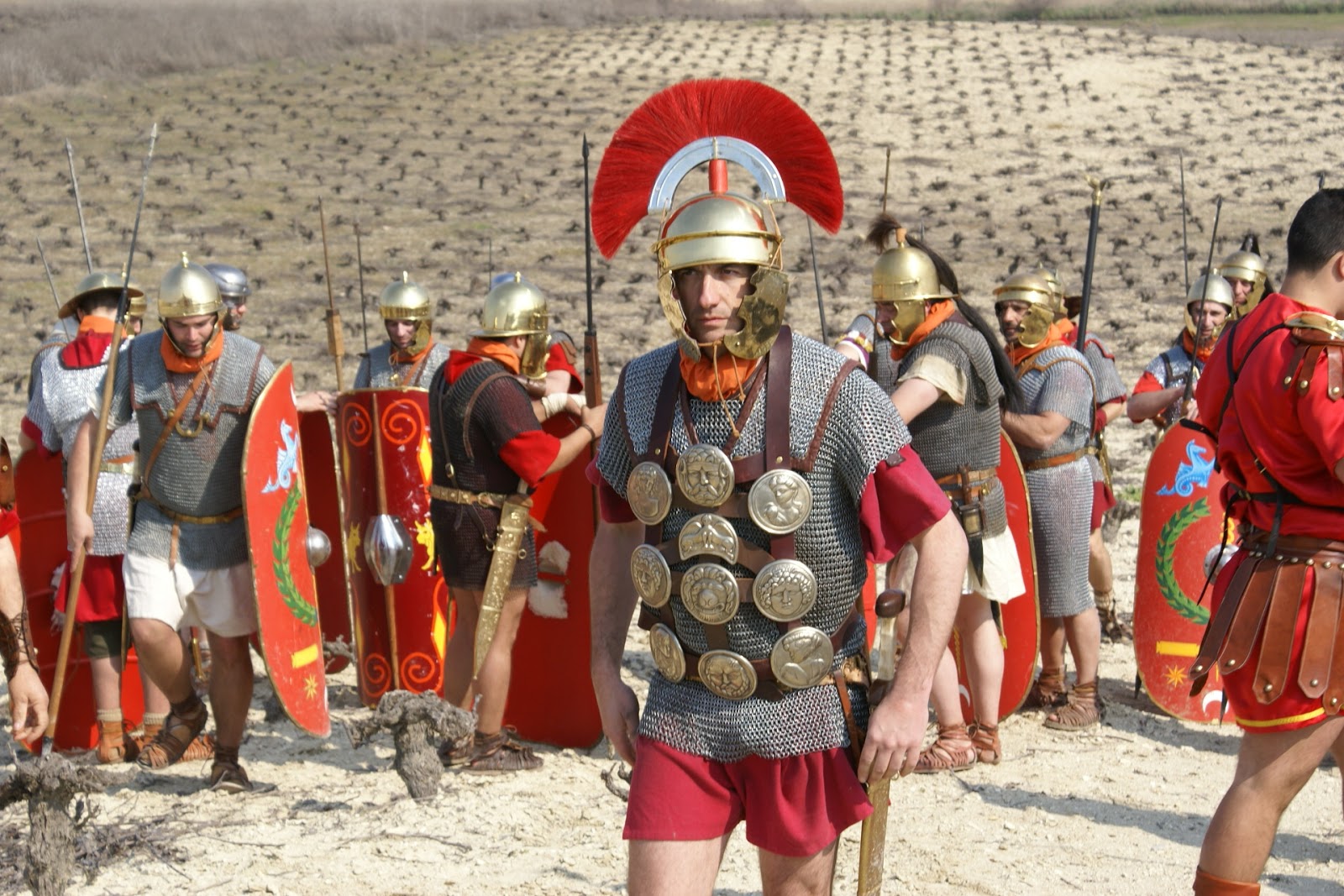
218 B.C. the Romans landed in Emporion, defeated the Carthaginians and started
the conquest of the Iberian Peninsula. But this conquest took them a long time, it finished in 19 B.C. under
the Emperor Augustus.
To organise Hispania they divided the territory into provinces, with a governor to keep the order and collect
taxes. Roman law was enforced and Latin became the official language.
Christianism was the official religion after the year 380 A.D. Society
was the same as in the rest of the empire, with free men that could participate
in the government and own property and slaves that didn´t have any
rights.
The Romas
built cities with two main streets that crosses each other: Cardo and Decumanus. At the intersection of these
streets they built the forum, a square with the main buildings of the city.
They built temples, markets, theatres, circuses, thermal baths, roads, bridges, and aqueducts. The Romans decorated the walls with paintings and mosaics.
Roman temple
Roman road (Via Romana)
Roman theatre of Merida (Spain)
Roman Acueduct of Segovia (Spain)
Roman bridge of Saragossa pic taken in the XIX century
Mosaic of the Medusa (National Museum of Archeology. Tarragona, Spain)